
Watch collecting is a hobby that evolves. There’s a journey that’s almost a cliché now. You get your first watch, you like it, but it doesn’t do things that other watches do. Maybe it’s quartz, maybe it’s missing a complication that you’d like. So you add something else to your collection. Maybe it’d be nice to have an automatic, a chronograph or a Japanese watch. Maybe you just want a red watch or something you can wear at the gym. Whatever the criteria, there’s a watch that will provide it, and before you know it, you’ve got a watch box. Maybe it’s got space for six watches. A perfect little collection of six watches. Lovely.
But hang on, the world of watch collecting laughs at your attempts at restraint. Six becomes eight, eight becomes ten. Will it ever end?
I did that. We all did. But now in 2026, I’ve realised that a nice-looking watch, or even a well-specced one, isn’t always the one you’ll connect with. From big brands like Seiko, Casio and Citizen to the various global microbrands, you can find whatever look, whatever spec and whatever vibe you want. But at the end of the day, they’re just companies putting out products.
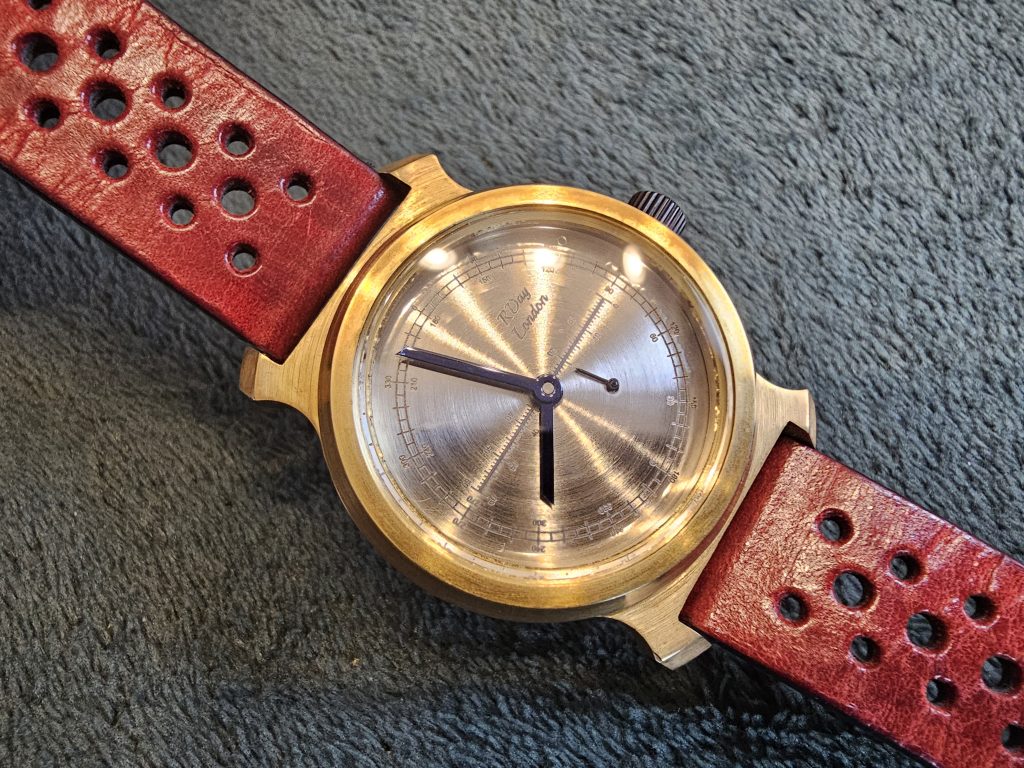
That’s led us to connect more with the UK watchmaking scene. These are real people taking a chance and putting out their vision for what they want a watch to be. They’ve got stories, they’ve got hopes, and they’re not just another San Martin or Phoibos, faceless and cold as they throw out watch after watch at a market that’s already far too responsive to trends as it is.
And that gets interesting because behind every watch is a story. Not a marketing pitch, not a focus-grouped design iteration. Just someone having a go. And one such person is Richard Day, the man behind R. Day Watches, a brand that is doing things that no one else is. We spoke to Richard to ask what led him to make some of the most unique watches available today.
You never really know what you’re going to get when you’re about to talk to a watchmaker. You’d be forgiven for thinking it’s a bit of a stuffy hobby where men dressed like maths professors are obsessing over details that 99% of people would never even notice, let alone understand. But any preconceptions we had of rounded spectacles, waistcoats, pocket watches and loupes shoved into eyes were immediately subverted, and our first moments with Richard were spent discussing our mutual fandom of Jeanette Goldstein, the actress who played Vasquez in Aliens.
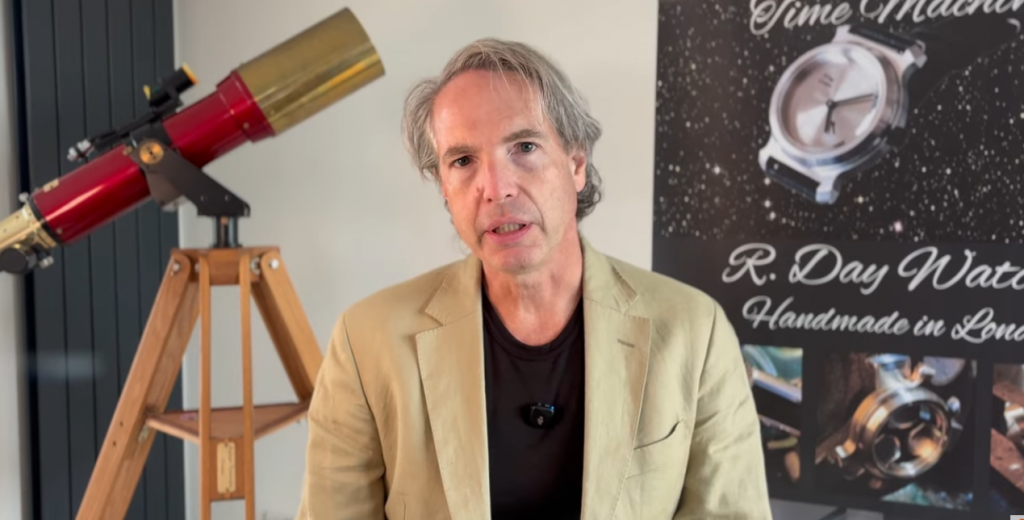
Speaking in a soft Canadian accent, still apparent despite his living in South London for the last 28 years, there’s a quiet confidence to him. He’s a good communicator, which is understandable given that his professional life started with him being a DJ in the early ‘90s for a rock station. The station’s reach extended into Vancouver and Seattle, which meant he was there back when alternative music was peaking in both quality and popularity. To this day, his Instagram posts will feature bands like Filter and Alice in Chains.
Ten minutes into a two-hour interview about watches, and we’re discussing grunge bands. This is going to be a fun interview.
Richard’s radio days ended when he embarked on a trip across the pond to travel around Europe, unsure, if not doubtful, if he’d ever return. “I was a terrible, terrible backpacker,” he reveals. “I travelled around for three months and spent all my money. I needed a job and so I decided I wanted to be a ski instructor.”
He asks me if I want all these details. I’m all in. We can talk about bezels or whatever later.
“This was at a time when Austrians didn’t really want to be ski instructors. It’s like working in McDonald’s for them; everyone does it when they’re young. And so they really needed foreigners. There was a test and if I passed that, I’d have a job and could stay. Fail, and I’d have to go back home.”
He tells us that he and the other candidates went out that afternoon, got drunk and staggered back at 7pm to hear their fates. He was one of the lucky ones, though, and with that, he was able to stay in Europe. The job then led to him meeting the lady who would become his wife, and eventually he moved in with her in Raynes Park South London. Wimbledon’s lesser-known cousin.
He worked in sports retail for a while. Starting out at Lilywhites, a massive sports/outdoors shop in London, before moving into retail management for a few years. But when his son was born, he became a full-time father and suddenly found himself in his 30s with some free time on his hands.
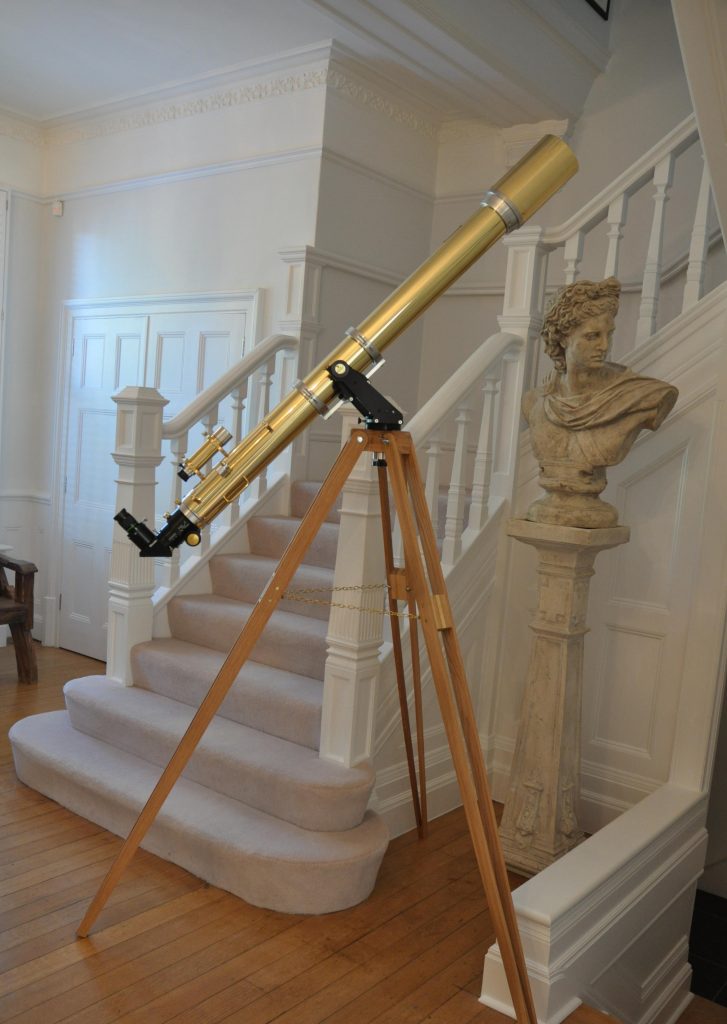
As an amateur astronomer, he was lamenting the scene’s move from traditional Victorian-style instruments to computer-aided, electronically-assisted astronomy. Where handmade, brass-engineered instruments used lenses and mirrors to connect the viewer to the stars, everything moved towards camera images on computer screens. And being someone who is prepared to give things a go, Richard decided that he’d try to make a telescope himself.
Not that he had any formal training in engineering or metalwork. “I did a little bit of metalworking in High School,” Richard explains. “Back in the ‘80s, they taught us just a little bit about everything and then let us loose on lathes and bandsaws. All kinds of stuff”
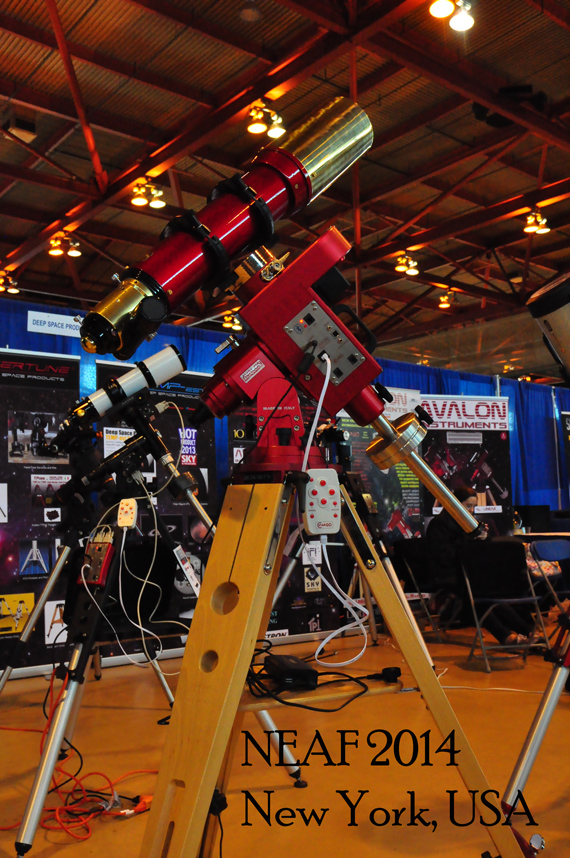
But he hadn’t touched that stuff during his 20s, but he was undeterred. “A lot of people make their own telescopes. They’ll just find a mirror and do it. There’s a guy called John Dobson, based in San Francisco, who devised a very simple method of making telescopes using a big mirror and then a smaller secondary one out to an eyepiece.”
“It was this very inexpensive way of giving larger aperture telescopes to amateurs, and there’s still this groundswell of amateur telescope making there.”
Quite how you get from that to making your own telescopes, we’re still not entirely sure, but Richard used books to get the basics down. Happy to digest it all at his own pace.
Richard set up a workshop at home in 2008 and started to re-learn the basics of working with metal. Eventually producing his own refracting telescopes. The beautiful brasswork and handmilled construction attracting praise and then potential customers. He set up his company, Skylight, to sell them. Each one was built to order from his home workshop. He eventually sold over a hundred of them, shipped all over the world.
However, there was a limit to how far this could go. “It’s a niche market, and I was building these long refractors, which was a niche in a niche. So I got to a point where I had taken it as far as it could go.”
And then, in 2016, Richard survived a major heart attack. A keen runner at the time, he credits his fitness and his wife’s presence as the reason why he’s still here. He began the slow process of recovery. “The only goal I had at that point was to run again.”
It’s a testament to how serious the heart attack was that the cardiac rehab unit wouldn’t let him do that for ten weeks before eventually relenting to his constant pleas.
“I can vividly remember this treadmill in the corner, and I’m thinking, I just want to run. I said to them to just hook me up to whatever so that I can run.”
But he was at a crossroads in his life. “At that point, I was thinking ‘what am I?’” he reflects. “You know? What’s left of me. But that (the run] was a real eye-opener.”
Despite having an interest in watches when he was younger, Richard had stopped wearing them in his 20s. This was true of a lot of people back then. Phones were the new hotness and made wearing a watch a little bit unnecessary (we say this as people who stopped wearing watches for a couple of decades ourselves), but eventually Richard found his way back to them.

“I can’t really say why. I might have been a victim of marketing. In Kitzbühel (in Austria) there was a hug downhill ski race every year that was heavily marketed at by watch brands. And then in Wimbledon, we were constantly bombarded with Rolex ads. I was a Formula One fan at the time, though, which was sponsored by TAG Heuer, and so I ended up buying a 2000 Classic.”
He then moved on to a Tag Kirium and started to rediscover his love of watches. So, with telescope making falling out of favour, and with Richard not really feeling up to packaging and posting big, heavy brass telescopes, he mused on what he could do with all that workshop equipment.
“There’s a lathe, there’s a milling machine. Do I sell them? Do I do something else? If I do something else, what do I do? And I thought, ‘Well, I like watches, and I’ve got some metal left over. What’s the worst that can happen?”
And sure, telescopes and watches both demand a degree of precision, but they’re two wholly different animals. Richard explains. “It was quite different. There’s quite a challenge in making telescopes because of the tolerances. There are a couple of areas where telescopes have to be very precise, and the light has to focus exactly at the point where the eyepiece is. But watches need a different precision because of how everything is just so small. The drill bits are tiny.”
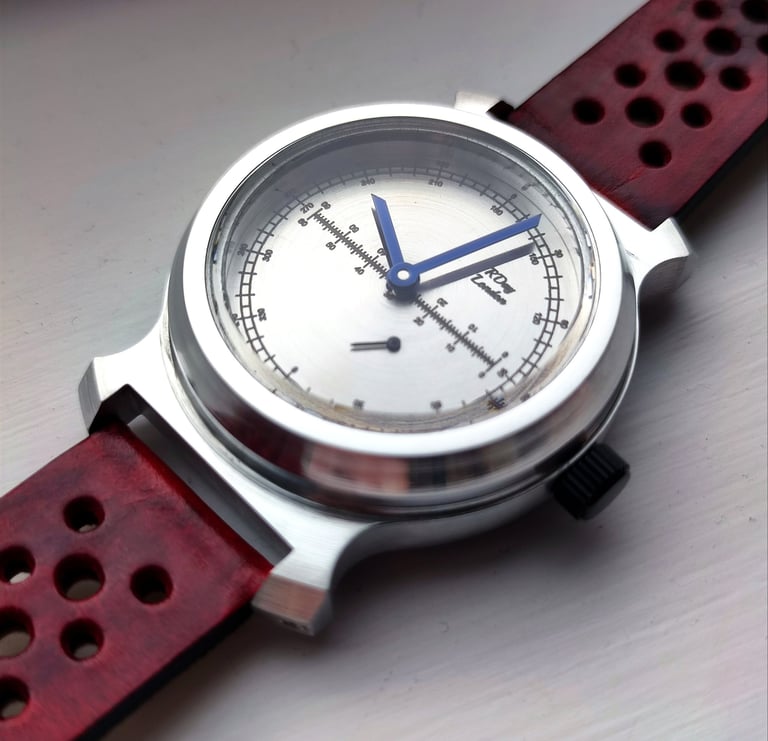
However, his very first experiment actually worked. He uses pre-made Miyota 8245 movements and has had them from the first watch. “It’s kind of a disaster,” he jokes as he shows us the prototype, “But it’s kind of a nice-looking disaster.”
There wasn’t even another influence from the watch world on his first piece. You can see that, though, the design language of R. Day doesn’t really speak to any other watch. “It was completely out of context,” Richard explains. “ I literally just had a piece of brass that was approximately the right size, and I stuck it on the lathe and started cutting to see what I could make.”
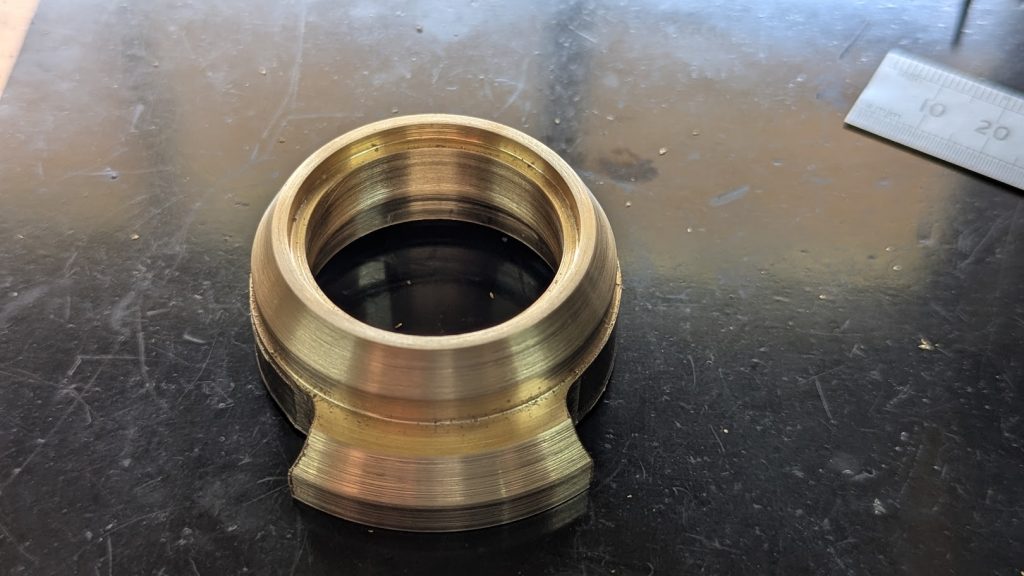
While being somewhat thrown together and sporting some serious quirks, such as the two lugs being different sizes, the R. Day DNA is quite evident: the unusual case shape with its curved lugs and the flat-bottomed back. And, quirks aside, it worked.
And this is without Richard having any kind of background in watch modding or repairs. He had done the BHI (British Horilogical Institute) course, but this is a distance learning course that’s more focused on movements than cases.
“I probably wouldn’t trust myself to service my own Omega, though,” he reveals.
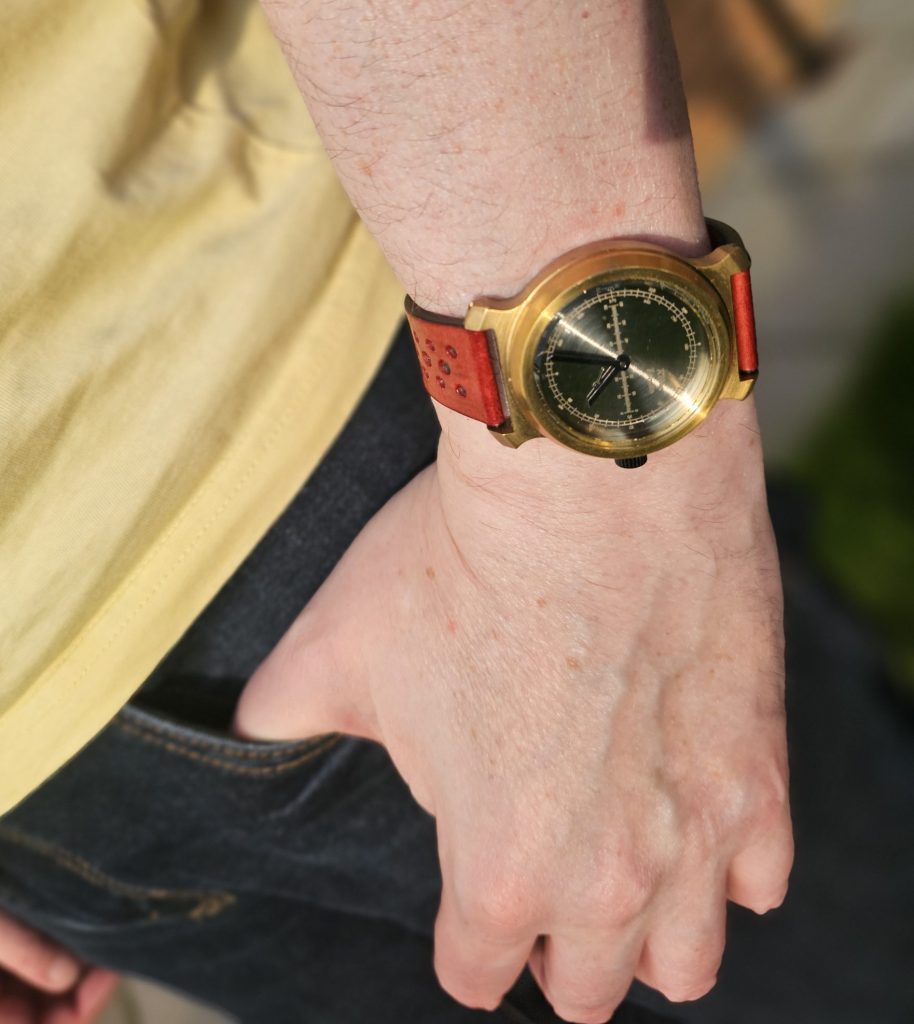
He flirted with the idea of maybe repairing clocks after doing the course. “I fancied myself as a clock repairer. And then I bought loads of clocks over COVID, never did anything with any of them, and now I’ve sold them off again.”
Eventually, Richard kept practising and refining until he created the Antares. Named after a red giant star, which suited the watch’s brass case, a material that Richard was always going to use in his first watch. Not just because of his familiarity with it from his telescope-making days, but also because of how it patinas.
The oxidisation process means that brass develops a certain characterful wear over time, and to test this, Richard wore the Antares for 365. A year later, he was happy with the look. We’ve since reviewed his latest watch, the Astro, and that’s now got a lot of patina to it, and it looks stunning. Richard explained that you can always polish it back to its original state, but there’s something about how it develops that you just don’t get from other materials.
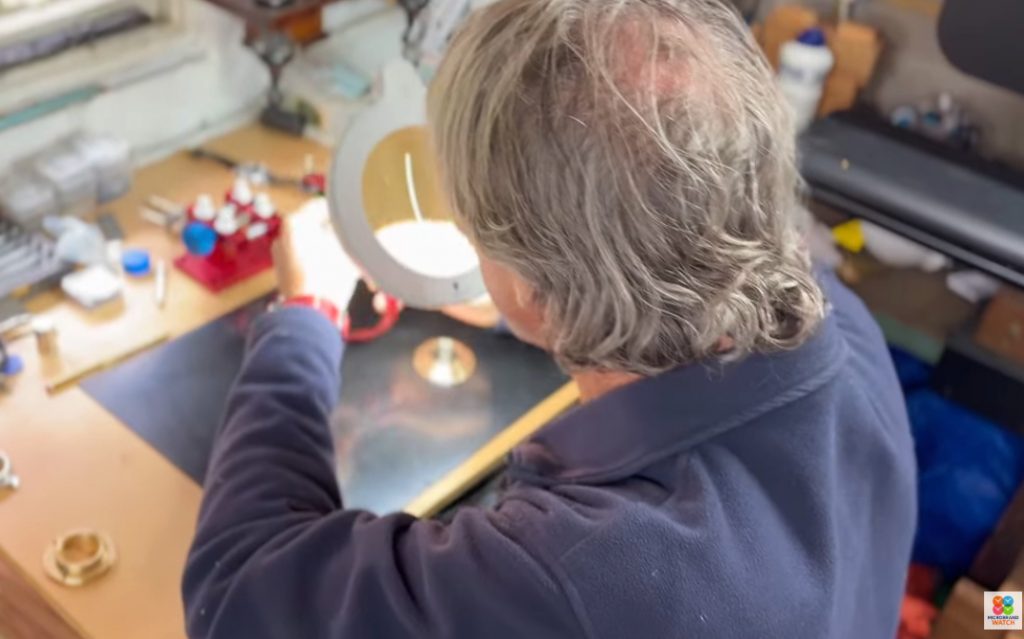
What’s really crazy about the brass case is that it’s made from a solid piece, and Richard literally works it into the final shape by hand.
“There are no guides, there are no stops,” he reveals. “Yeah, I’ve had to discard some cases.”
The dials are also tricky. “There’s been times where I’ve missed the hole, and I’ve had to redo the dial because the small seconds is, you know, a 25th of a millimetre too far left or something like that, and that’s on me. And so then I’m making a new dial.”
“I’ll be the first one to say that I’m not trying to out-Rolex Rolex here. CNC (Computer Numerical Control not the ‘Everybody Dance Now’ band) and computer-aided design are so brutally efficient, but if you look closely at my watches, they’re not perfect. They’re handmade, like a sculpted piece of metal on your wrist. I’m not trying to make them exactly like the one that came before. They’re special,” he says proudly.
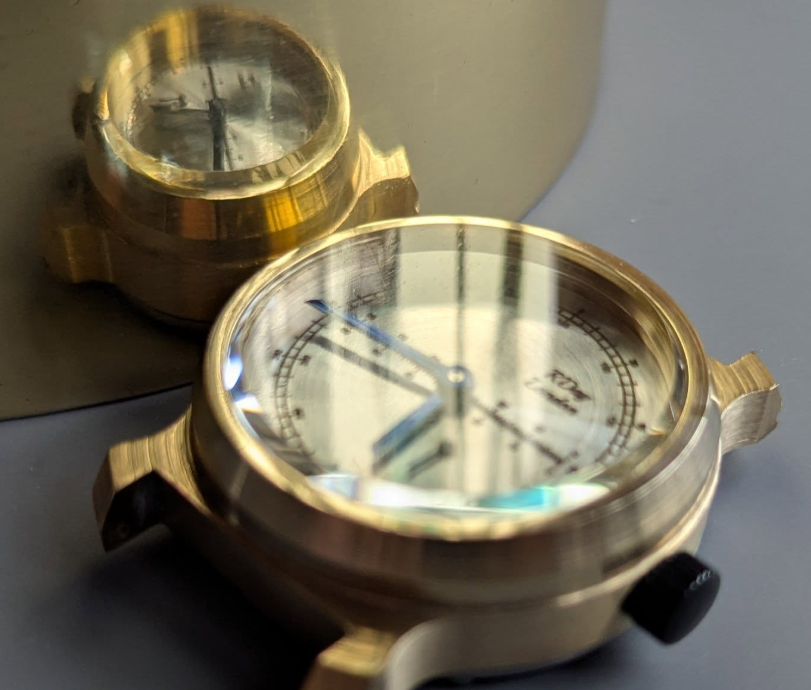
He makes each component in batches but in limited amounts. The watches aren’t built to order like his telescopes were, but it’s close, with him only maintaining a fairly small supply at any time. The entire process of making one watch takes in the region of 35-40 hours, not including the testing.
So what’s the balance between the engineering and the artistry?
“I would never call myself an artist. I used to do some drawing when I was in my 20s, so there’s a little talent there, but I’m not an artist. What I do tend to see, and this might sound a little odd, is a beauty in metal. I find it interesting. I love working with it. And there’s part of me that when I’m cutting into something, I feel there’s something in there that I need to get out, if you know what I mean. I just need to uncover it.”
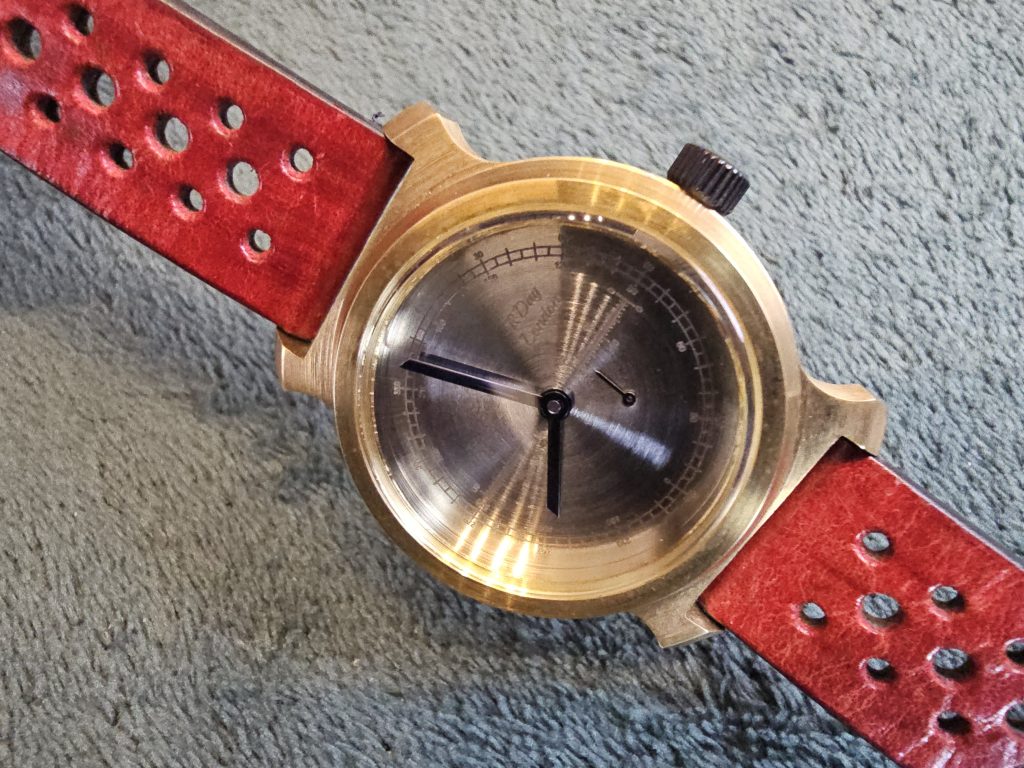
The designs are all his, albeit with him bouncing them off his wife and son when he needs another opinion. “Sometimes you can’t see the wood through the trees anymore. Especially when I’m obsessing over measurements that don’t seem right for forty minutes.”
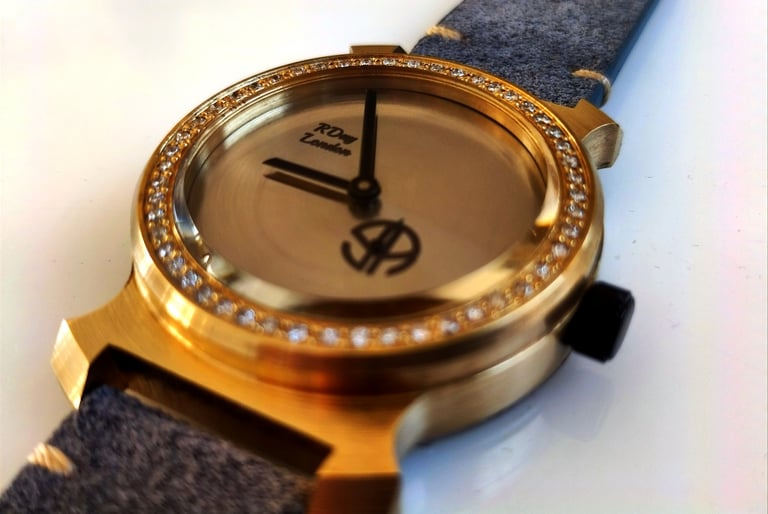
With steel being too hard and needing the kind of cooling that his workshop cannot provide, Richard has also produced watches in aluminium, which he’s trained himself to say the British way. He describes the process of working with both aluminium and brass.
“Both are quite soft, and so they are relatively easy to machine. Brass comes off in chips, so you end up with tonnes and tonnes of tiny little pieces of it everywhere, whereas aluminium spirals off in long curls. But it looks like steel is softer. It’s probably not the watch for you if you’re hard on watches,” he reveals, but the benefit of the aluminium is that it’s incredibly light and, as evidenced by photos of the aluminium Astro and Vega, looks stunning.
So is he going to keep iterating on the Astro, already an evolution of his previous watches?
“I’m working on a couple of different ideas at the moment, and there’s a bit of an evolution that will take place over the next six months. I’m looking at different movements, although I really like this one with the small seconds being there.”
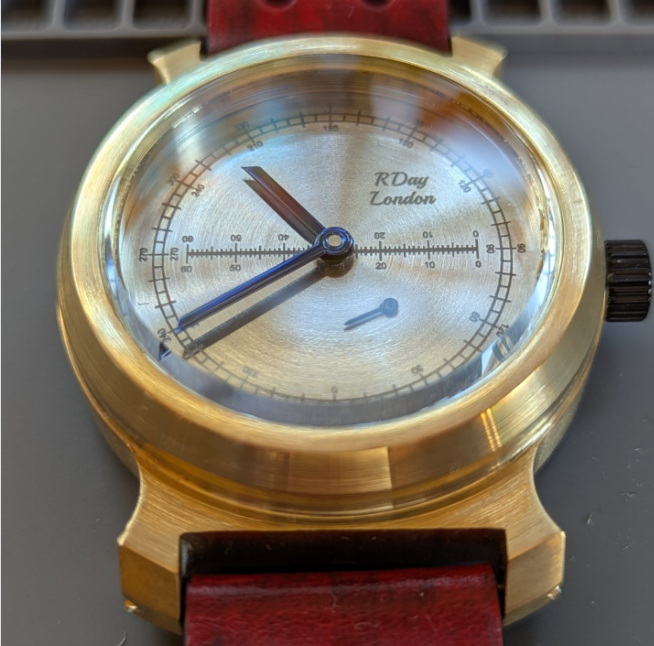
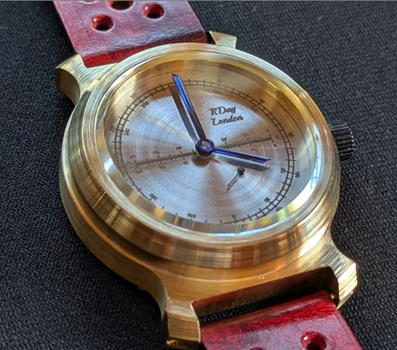
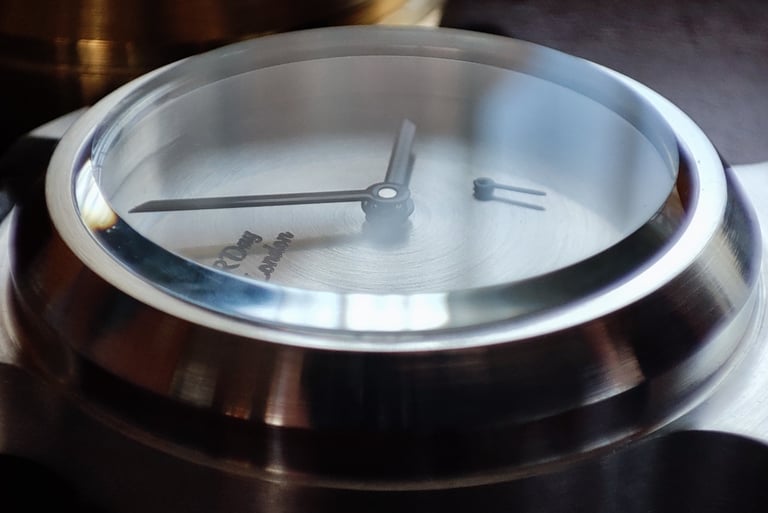
On the Astro, the small seconds just floats there on the dial, just right of the middle. There’s no subdial there, just a small hand. “I can say with some whimsy that that was a conscious choice. I just want to have something dynamic to it as opposed to a large central second hand. And I like the fact that it just sits there on its own doing its own thing. “
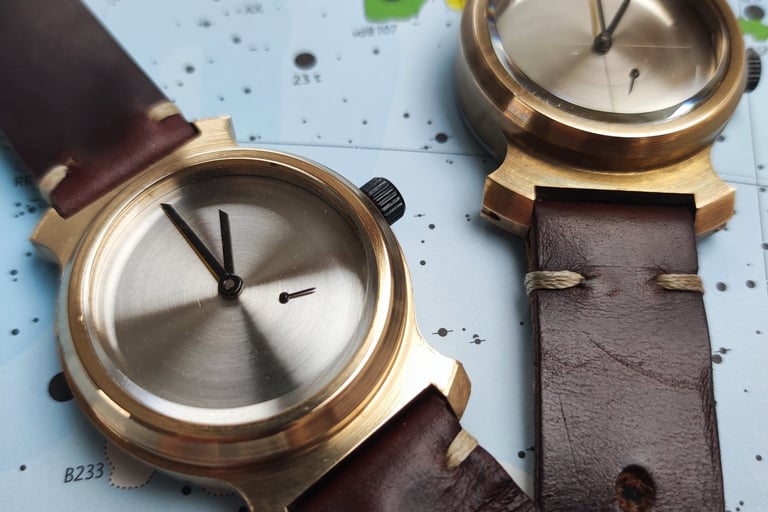
He’s also looking at redesigning the back, although we actually rather liked the case back on the Astro. It’s certainly quite plain, but there’s something about the starkness of it and the matter-of-fact presentation of the manufacturing information that we really liked about it, so it’ll be interesting to see what Richard does next with it.
“I’ve also been considering a possible manual movement because it would allow me to slim the watch quite a lot and make it look quite different, but these are all just ideas; nothing is in place yet.”
Whatever he does next, you can bet your mortgage on it being different to everyone else. The microbrand scene is certainly full of archetypes, the same old divers, field watches and dress pieces. Different colours, different dial textures, but still sharing the same design DNA as the major brands that inspire them.
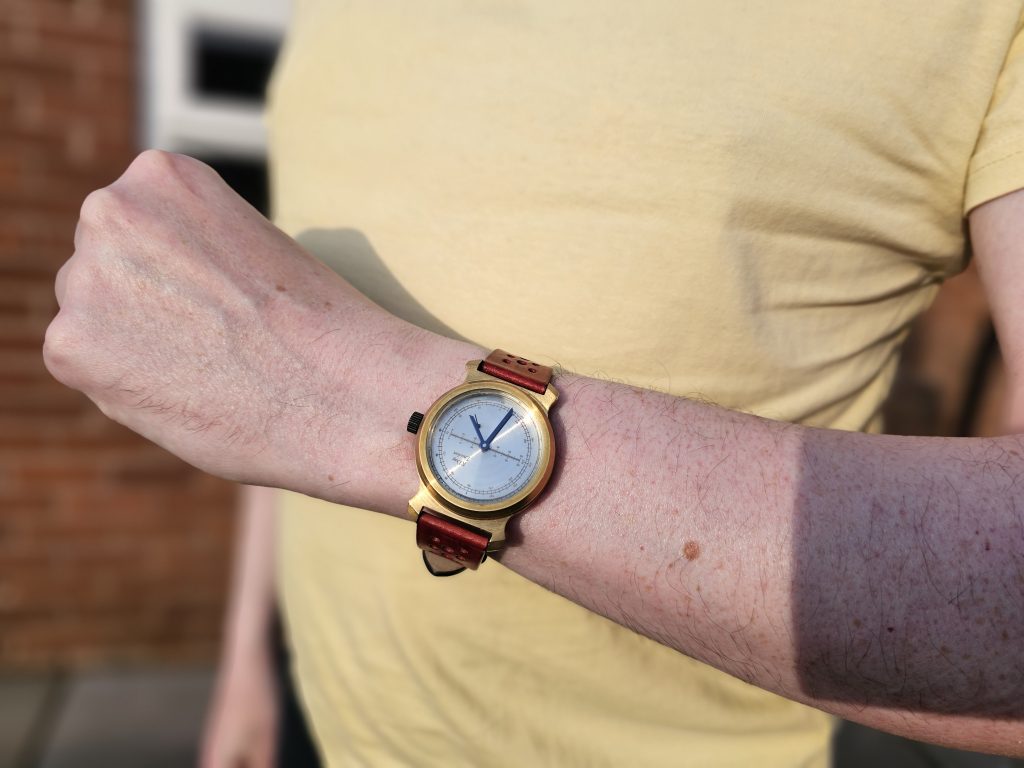
“Yeah, there’s a lot of that in the watch world,” Richard agrees. “A lot of clones, a lot of similarities. That doesn’t really drive me. If I’m in a room with someone else or, you know, a watch event, I would much rather someone look at my wrist and say ‘what this hell is that? What are you wearing,’ as opposed to ‘oh, it’s one of those.”
“It drives me, I get a kick out of that.”
And with so many new microbrands hitting the scene with more and more frequency, Richard’s vision and ability to manifest his own designs will help him stand out. “I think the scene is pretty healthy but a little crowded, such is the nature of a successful industry. Personally, I find the noise of similarity distracts from seeing brands that have something genuine and unique to bring.”
After a couple of hours of watch talk, interspersed with chat about guitars, music and the 1994 Brandon Lee film, The Crow, there was only one question left to ask. What advice would Richard give to anyone looking to start their own watch brand today?
Ever humble and politely Canadian, he offers these final thoughts: “Am I successful enough at this to provide advice? I’m not sure, but if I were to do it again, I wouldn’t change much. I’d continue to bring something genuine and honest. And I’d be open about it. There’s a sea of brands making similar watches. Be yourself and be different.”
Extra Resources
MicrobrandWatches YouTube Feature